Strength Behind the Signature: Testing a Parent Company Guarantee Before You Rely On It
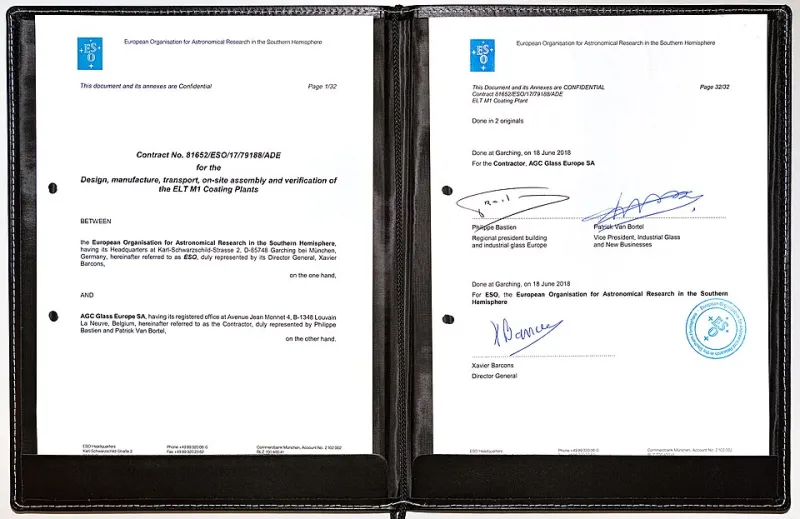
Photo: ESO/M.Zamani, CC BY 4.0, via Wikimedia Commons
A parent company guarantee arrives in a tender pack looking like comfort. It is a promise from a corporate parent, often offered in place of a performance bond, a retention or a cash deposit. The commercial team sees a familiar name at the top of the group and treats the matter as settled. That is where the risk begins.
A guarantee is not cash. It does not sit in an account, it cannot be drawn in a morning, and it does not remove the need to establish a default. What it does is add a second legal person to the list of parties you can pursue. Whether that is worth more than the security it replaces turns on two questions: the strength of the entity giving the promise, and the precision of the words it has signed.
What the instrument actually secures
Most parent company guarantees are tripartite arrangements between the parent, the subsidiary and the buyer. The parent undertakes to see to it that the subsidiary performs its obligations. In some drafts the parent promises to perform the contract itself if the subsidiary does not; in others it promises only to ensure performance. The difference is not academic. A see-to-it guarantee can leave the buyer arguing about whether the parent used sufficient influence, while a direct performance obligation is closer to a promise to step into the contract.
What the guarantee does not do is create a fund. It creates a claim. The buyer must still prove the underlying breach, quantify the loss and, if necessary, litigate or arbitrate in the forum the guarantee specifies. That is a slower and more uncertain route than calling a bond.
Guarantee or indemnity: the words that change the risk
A guarantee is a secondary obligation. The guarantor is liable only if the principal fails. An indemnity is a primary obligation: the indemnifying party owes the sum directly, without the buyer first having to pursue the subsidiary. Well-drafted instruments often combine the two, using language such as 'as principal debtor and not merely as surety', and including an indemnity for any loss arising from the subsidiary's non-performance.
Buyers should read for three signals. First, whether the guarantor's liability is expressed as a primary obligation. Second, whether the buyer must exhaust remedies against the subsidiary before claiming. Third, whether the instrument is a guarantee and indemnity, which gives two routes to recovery rather than one. Where the drafting is silent on these points, the default position under English law may be narrower than the buyer assumes.
Covenant strength: read the right balance sheet
A guarantee is only as good as the entity behind it. In group structures the parent may be a holding company with few assets of its own, whose value sits in subsidiaries that are themselves leveraged or located overseas. Consolidated accounts can flatter the picture. The buyer should ask for the guarantor's standalone accounts, its net asset position, any charges over its shares or assets, and confirmation that the guarantee is not prohibited by its own borrowing arrangements.
The question is not whether the group is large. It is whether this legal entity, in this jurisdiction, has assets that could be reached if the guarantee were called. A parent with a strong trading business and a weak holding structure is a different proposition from a parent with a modest balance sheet but a clean, unencumbered position.
Five clauses that decide the outcome
Scope. Does the guarantee cover all obligations under the contract, including variations, or only the original scope? A guarantee that does not extend to instructed changes will be weakest when the project has changed most.
Continuing security. Does the guarantee survive part-payment or a variation, or is it discharged by dealing with the subsidiary? Look for a clause confirming that the guarantee is continuing and not affected by any variation, waiver or release.
Waiver of defences. Can the guarantor rely on defences available to the subsidiary, or on the buyer's conduct, to resist payment? A robust instrument limits those defences expressly.
Duration. When does the guarantee expire, and what survives termination? Defects liability, latent defects and final account disputes often outlast the works.
Governing law and jurisdiction. A guarantee governed by a foreign law, with disputes reserved to a court where enforcement is slow, offers less practical protection than its face value suggests.
Enforcement is a practical question
Even a strong covenant can be difficult to realise. The buyer should ask where the guarantor is incorporated, whether it has assets in the UK, whether service of process is straightforward, and how long a claim would take in the specified forum. A guarantee from an overseas parent may be perfectly valid and still be a poor substitute for a bond, because the cost and time of enforcement fall on the buyer.
When cash remains the better answer
Cash security, whether a bond, a deposit or a retention, is not free. It ties up capacity, it can be expensive for the supplier, and it is not always available. But it is liquid and it is predictable. For smaller subcontractors, thinly capitalised special purpose vehicles, short programmes or suppliers whose parent is itself under pressure, a guarantee may add paperwork without adding recoverable value. The test is comparative: does the guarantee give you a better route to recovery than the cash or bond you would otherwise hold?
A decision sequence for commercial teams
Identify the legal entity giving the guarantee, not the brand. Obtain standalone financial information and check for encumbrances. Read the scope, the primary obligation language, the continuing security clause and the duration. Model the enforcement route and the likely timescale. Compare the result with the cash security on offer. Record the decision, and the reasons, in the contract file.
A parent company guarantee can be a sensible alternative to cash. It becomes a substitute for diligence only when the buyer treats the parent's name as the protection itself. The guarantee is a promise, and promises are worth what the promisor can pay and what the clause allows you to claim.